
Level 3 Gateway

Level 3 payment processing requires a level 3 gateway, but most merchants don’t realize how big an impact gateway selection has on merchant fees paid.

Merchants selling to other businesses or the government benefit from Level 3 processing and the savings this provides on commercial, purchasing and government transactions by processing level 3 Data. What gateway companies won’t tell you, is that not only do you need to send special data, but there are a bunch of rules to qualify for Data Rate III interchange rates as shown in the image below. Don’t follow the rules, and you’ll pay Data Rate I or Standard.
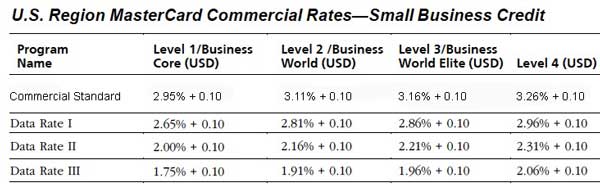
level 3 interchange ratesWhat are the rules? For starters, there are additional fields that must be submitted with the transaction. All the level 3 gateways support submitting the data, though they may do it in different ways. There are other rules such as the authorization and settlement amount must match. It’s unrealistic to expect any user to know all the rules for any transaction to qualify at the lowest interchange rate, so a payment gateway that automates that process is critical. This is where most payment gateways fail. They can submit data, but have no intelligence to help merchants comply with qualification rules.

What gateway supports level 3 for retail, kiosk, mobile or any swiped transaction? CenPOS.

Gateways must certify level 3 to each acquirer, also known as payment processor, or credit card processor. The certifications can include for retail, retail EMV, MOTO (Mail Order Telephone Order), and ecommerce. Very few gateways certify level 3 for all sales channels. The only one I’m aware of that’s certified retail and retail EMV is CenPOS.

Gateways supporting level 3 for MOTO:

What level 3 gateway is compatible with First Data? CenPOS, First Data Global Gateway e4 – now called Payeezy. While CenPOS automates level III processing, First Data has multiple optional steps after the sale, leaving compliance up to the individual user; additionally, their method does not guarantee that all rules will be met to qualify for level III interchange rates. Authorize.net and Payflow Pro offer level III with certain API’s only.

What level 3 gateway is compatible with Vantiv or NPC? CenPOS

What level 3 gateway is compatible with Chase Paymentech? CenPOS, Paymentech Orbital, PayTrace. Paymentech and Paytrace have optional extra steps, leaving compliance up to the individual user; additionally, their methods do not guarantee that all rules will be met to qualify for level III interchange rates. Authorize.net and Payflow Pro offer level III with certain API’s only.

What level 3 gateway is compatible with Tsys? CenPOS, eProcessing Network, Authorize.net and Payflow Pro offer level III with certain API’s only

What level 3 gateway is compatible with Moneris? CenPOS

What about Revolution Payments, Vantage Card Services and other gateways not listed here? In most cases, the company is a reseller of a gateway listed above, not a gateway manufacturer. Network Merchants, LLC (NMI) distributes a white label solution that supports level 3 data, but there’s no public information about acquirer certification; BluePay and 3DSI also offer level 3, but it’s unclear what acquirers. Please add your suggestions in comments.

As of September 15, 2015, of the brands listed in this post, only CenPOS has both certified EMV terminals to accept chip cards with their gateway, and has also certified level 3 processing for all sales channels via any method, including API, virtual terminal, and online payments.


Authorize.net and level 3 processing for business to business

The Authorize.net virtual terminal is expensive for business to business merchants, even though rates seem cheap. That’s because Authorize.net ® only supports level III data for certain integrated solutions, leaving B2B companies out of luck qualifying for the lowest interchange rates for corporate, business and purchasing cards.

Authorize.net Payment Gateway Rates

  • $49 set up
  • $25 /month
  • $.10 per transaction
  • $.10 daily batch
  • Additional services which used to be extra, are now free: Automated Recurring Billing, Advanced Fraud Detection Suite TM, Customer Information Manager (subscription management).

level 3 interchange ratesNot shown above: Data Rate III large ticket ($10,000 minimum) Level 1 rate is 1.20% and $40, up to Level 4, 1.51% and $40. MasterCard Cardholder Spending Requirements for Small Business Products: Business Level 1 – $0 to $24,999; Business Level 2 – $25,000 to $49,999; Business Level 3 – $50,000 to $99,999; Business Level 4 – $100,000 and greater.

The table below shows different rates possible for the same transaction. Using the Authorize.net virtual terminal, the best rate possible for a Level 1 Business card is usually 2.65%. While the Authorize.net virtual terminal supports Level II Data, to qualify for the Level II rate, it requires a valid sales tax amount, tax indicator and valid tax id. Sales tax must be between 0.1% and 30%. If tax exempt ($0 entered as tax amount or blank) will clear at Commercial Data Rate I. Most business to business companies do not have a sales tax amount.

The examples below include the interchange fees above and the payment gateway transaction fees for Authorize.net qualifying transactions at Data Rate I and CenPOS qualifying transactions at Data Rate III (also known as Data Rate 1 and Data Rate 3)

Authorize.net vs CenPOS payment gateway example for Level 1 card

$5,000 sale, Authorize.net cost is $148.10 vs $108.20 CenPOS.*
$25,000 sale, Authorize.net cost is $662.60 vs $365.20 CenPOS.*

Authorize.net vs CenPOS payment gateway example for Level 4 card

$5,000 sale, Authorize.net cost is $132.60 vs $92.70 CenPOS.* CenPOS saves merchant 27%.
$25,000 sale, Authorize.net cost is $740.10 vs $442.70 CenPOS. CenPOS saves merchant 40%.

How does CenPOS help merchants qualify transactions for level 3 rates? There are multiple requirements to qualify for the level 3 rates. These include submitting level 3 data, valid authorization, and authorization and settlement amount must match, among others. CenPOS automates interchange management in compliance with card acceptance rules, making it light and easy for users to comply, while also removing employee decision making that can impact the cost of card acceptance.

CenPOS customers achieve similar results across all sales channels, including retail. CenPOS is compatible with all the major processors, so merchants do not need to change their financial partners. No special software is required; users can access via a secure web page, mobile device, or integrated solution. Contact CenPOS Authorized Reseller Christine Speedy today for a demo and free trial.


Bin Management – Shift4 vs CardSense vs CenPOS

What is bin management software, or bin spinning? How does bin management differ from interchange optimization with least cost routing? Shift4’s Universal Transaction Gateway® (UTG®), Element’s CardSense™, and CenPOS’s end to end payment engine have different approaches to helping merchants reduce credit card processing fees. Bin management requires a hosted, server-based payment gateway.

Identifying BIN numbers is a challenge due to multiple resources to obtain and maintain the data, which is in a constant state of flux. Card issuers refer to the leading six digits on the card as an “issuer identification number (IIN)”, or “bank identification number (BIN)”. All BIN’s have a sponsor bank. Interchange fees, the bulk of credit card processing fees are related to the BIN. The BIN number identifies the card brand (Visa, MasterCard etc), card issuing bank, type of card (debit or credit), category of card (business, purchasing, prepaid, etc), and country of origin, in addition to other data. 

Is pin debit or signature debit cheaper? Cashiers were trained to ask “will that be credit or debit?” years ago when there was a significant cost differential between signature debit and pin debit. After the Durbin Amendment became law, about 70% of debit cards now carry the same cost of .05% and $.22 per transaction, but there’s still advantages to routing transactions:

  • Pin debit has a 14 day dispute period vs 120 days for signature debit
  • Dues and association fees are not applicable for pin debit
  • For cards that don’t fall under the big bank rules of fixed .05%, fees vary depending on the transaction routing; there’s a threshold where it’s cheaper to process as signature vs pin debit.

All three gateways enable merchants to manage the threshold and can communicate with a terminal to prompt the customer in the optimal way for the merchant.

Shift4 vs CardSense vs CenPOS retail debit card bin management

Element PS CardSense BIN management service allows merchants to differentiate between credit, PIN-debit, prepaid, and FSA/HSA cards, and then business management software then allows the merchant to decide how to process the transaction: as a PIN debit, prepaid debit or a healthcare card; merchants are directed to the API for POS integration. To use CardSense, merchants must have an Element PS merchant account, and an API is available to integrate to their POS.

Shift4 identifies card type as debit or credit, then based on merchant defined threshold, prompts the customer the preferred way – signature or pin- to process the debit transaction. To use Shift4 for retail, merchants can use the virtual terminal with any merchant account, or integrate with a POS system.

CenPOS identifies card type as debit or credit, then based on merchant defined threshold, prompts the customer the preferred way – signature or pin- to process the debit transaction; additionally, using proprietary least cost routing technology, CenPOS dynamically routes the transaction to the lowest cost debit network (Star, Pulse, Internlink etc), if applicable. To use CenPOS for retail, merchants use the virtual terminal with any merchant account, or integrated with a POS system.

Shift4 vs CardSense vs CenPOS retail credit card bin management

There’s no public information that Shift4 or CardSense offer additional bin management beyond debit. CenPOS retail bin management also supports all commercial cards, including corporate, purchasing, and business cards. CenPOS has uniquely certified their gateway for retail level III processing, significantly reducing interchange fees for eligible cards.  For example, a $7,500 building supply sale could be reduced from 2.65% + $.10 to 1.20% + $40.00. Unlike pin debit, which prompts customers for action, level III prompts cashiers for action, and dependent upon merchant rules, cannot be bypassed.

Cash management optimization

CenPOS’s patented optimization of payment processing encompasses many elements to help merchants mitigate risk and increase profit margins. CenPOS products use merchant preferences and transaction profiles to manage the expense of payment interchange and provide a method for electronically delivering coupons. Using this technology, businesses can accept any form of payment via websites, store fronts, call centers, and mobile applications to improve customer engagement and simplify reconciliation. The intelligent system closely manages the full lifecycle of each transaction and utilizes advanced risk management and proprietary transaction routing to reduce the total cost of payment acceptance.

In summary, bin management is a host-based solution to help merchants reduce merchant fees and mitigate dispute or ‘chargeback’ risk. It’s a step above countertop terminal capabilities, but limited in impact since debit fees became regulated. CenPOS’s cash management optimization of payment processing is a powerful system empowering merchants to control profit margins across all sales channels.

Disclaimer: Shift4 and Element PS information is based upon publicly available information as of this date. The CenPOS information herein is not all inclusive.