Visa Stored Credential Transaction Mandates 2017

Whether you use token billing or have been considering it, all businesses storing credit cards are impacted by Visa rules updates. Visa has published multiple updates about requirements for its Stored Credential Transaction framework, including mandates to identify initial storage and subsequent usage of payment credentials.

If your business stores credit cards, including a 3rd party payment gateway or any software, you’re impacted. Merchants should not assume that any software or technology in their payment processing ecosystem is automatically updated and compliant. To the contrary, there are specific items that merchants will need to take action to implement. Now is the time to learn more and make a plan. While some businesses were impacted in April, most have until October 14, 2017 to comply.

Visit the Visa USA web site for more information; Visa Merchant Business News Digest. PDF download: Advance Copy of Rules for Stored Credential Transaction Framework REGIONS: US, AP, Canada, CEMEA, LAC, Europe, 15 JUN 2017.

##

TIP: All card brands have their own spin but frequently have similar rules. Need help to get compliant? Contact Christine Speedy to learn more about solutions for your business that are quick and easy to adopt, increasing efficiency and growing profits virtually overnight.

VISA FRAUD DISPUTE RULES CHANGES IMPACT CARD NOT PRESENT

April 5, 2017—This alert contains critical information regarding new and revised Visa card acceptance rules effective now and coming in the future for merchants. Business to business companies may be at higher risk of associated chargeback losses or declines due to the average size of order. Effective April 22, 2017, Revisions have been made to split the “Other Fraud” Dispute condition under Enhanced Dispute Resolution into separate conditions for Card-Present and Card-Absent Transactions, and to incorporate changes to the payment flow related to Disputes.

Christine’s Analysis: Merchants need to support both EMV chip for Card-Present and Verified by Visa for card not present. Verified by Visa is their brand for 3-D Secure, a global security protocol for cardholder authentication across all card brands. For example, a  cardholder might be asked to enter a PIN number or answer some other type of authentication question. Cardholder authentication for Card-Absent Transactions shifts liability for “it wasn’t me” disputes to the issuer. This card-absent cardholder authentication process requires cardholders self-initiate payments, eliminating collecting card numbers via phone or paper credit card authorization forms. Merchants are rewarded for using cardholder authentication with reduced interchange rates and increased approvals.

Christine’s TIP: Per Visa rule 5.4.2.5, a US merchant or its agent must not Request the Card Verification Value 2 data on any paper Order Form. Replace paper forms with digital, PCI Compliant forms and online payment solutions with cardholder authentication ASAP.

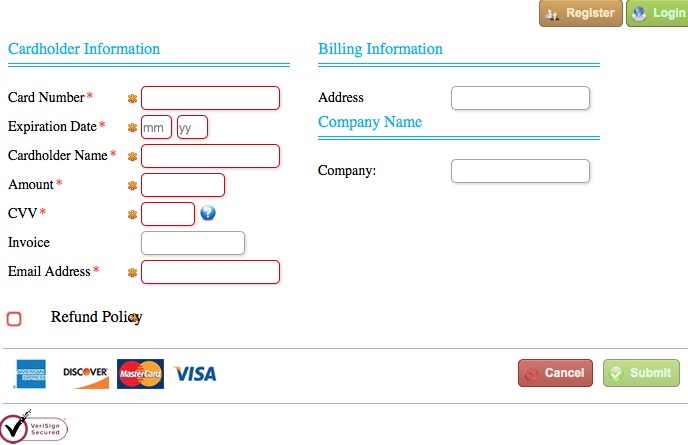
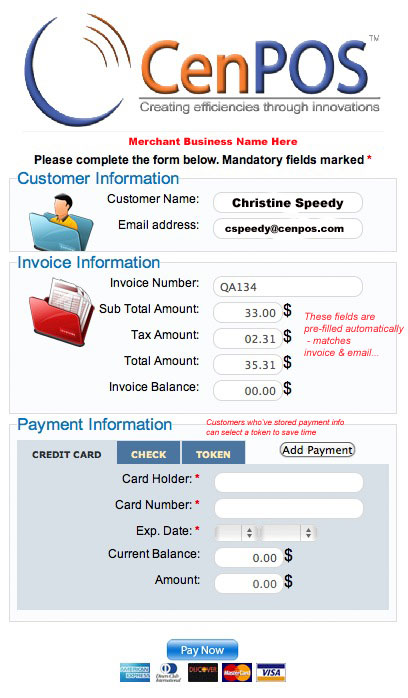
Online payment solutions include a hosted pay page like the one shown below.

hosted paypage online payments

A hosted pay page empowers customers to make secure payments online using a 3rd party provider (Payment Gateway also known as a Payment Facilitator.)

Other solutions include pushing out payment requests, such as via a text or email. electronic invoice presentment and payment eippWith new and revised rules impacting the entire payment ecosystem including issuer, acquirer, gateway, merchant, and potentially other software like ERP’s and ecommerce shopping carts, merchants should verify all parts their payment ecosystem supports them. Desktop terminals are not capable of supporting all the rules for card absent needs; a cloud-based payment gateway is required whether non-integrated, or integrated ecommerce shopping cart, ERP or other software.

Does your online payment solution support Verified by Visa, or do you need a solution? Contact Christine Speedy at 954-942-0483 for a fast and easy solution, compatible with your existing credit card processor.

What is Auth Code 14, declined?

A credit card processing response of Auth Code 14, is a decline for Processor Declined, Fraud Suspected. Why does this happens for recurring billing, including unscheduled recurring billing using a stored credential, also known as a token on file? The method used to store the first transaction, and process subsequent transactions can impact authorization approvals.

For example, a merchant has successfully processed unscheduled transactions using a token on file since 2016. However, in 2017, declined for Auth Code 14 appeared.
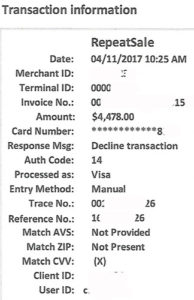
auth code decline 14

Why would a previously stored and working card decline now? Look at the AVS,  ZIP, and CVV response above. Compare to the example below.
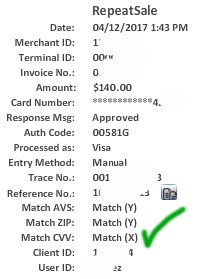
token billing

For the second receipt, AVS match Y= address and 5 digit zip match, Zip match Y=Address and 5 digit zip match, CVV = match X, cannot verify CVV. Because CVV was verified a match on the initial zero dollar authorization it’s not required to be presented on subsequent transactions.

The first example is returning that information does not match, thus the reason for suspected fraud. Without looking at the very first authorization when token was created, several possibilities exist, including  cardholder issued a new chip card with same number but other changes occurred in the interim; cardholder address changed or was never validated.

Merchants are at risk of issuer initiated chargeback if authorization rules are not followed. Refer to  Visa Product and Service Rules, Table 5-21: Requirements for Prepayments and Transactions Using Stored Credentials for more information. With recent rules changes, and more coming October 2017, merchants need a cloud based solution that can automate compliance. Not all of them have that intelligence. For example, some cloud based payment gateways enable merchants to perform prohibited transaction requests that put the authorization at risk of chargeback for non-compliance.

Due to many recent and upcoming changes for card absent and recurring billing with stored credentials, merchants are advised to review processes to include empowering customers to self-manage adding cards on file, and using cardholder authentication. Visa requires Verified by Visa for cardholder authentication in a card not present environment; without it, expect increasing declines.

Disclaimer: The rules of card acceptance are very complex and change typically twice a year, sometimes with interim bulletins regarding more changes. Merchants should read the manual for complete details regarding card acceptance for your business type.

Christine Speedy, authorized CenPOS reseller, provides universal payment processing solutions, including cardholder authentication, to maximize merchant profits and mitigate risk across multiple sales channels. Contact Christine at 954-942-0483. 

Hotel credit card authorization form 2017 change

Hotel and lodging industry must update best practices due to 2016 and 2017 changes in Visa and MasterCard rules. Cardholder authentication and multiple authorization indicators are two key components of change. Hotels that comply will maximize profits and security. Noncompliance will result in higher credit card acceptance fees due to penalties, increased declines, reduced profits, and new chargeback risk.hotel credit card authorization formFor those still using paper credit card authorization forms, few are in compliance with Visa Core Rules 5.4.2.5 Prohibition against Requiring Cardholder or Account Data – US Region.

“A US Merchant or its agent must not: Request the Card Verification Value 2 data on any paper Order Form.”

Authorization validity is front and center to the 2017 rules changes. Merchants used to get and authorization, and settle it later at checkout. Now merchants must send the correct transaction types and link them all together with a unique identifier:

  1. The ESTIMATE (Visa) or UNDEFINED (MasterCard) indicator is sent when the final settlement amount is unknown. The customer must be informed that it is an estimate as well.
  2. INCREMENTAL authorization is obtained when the original authorization expires or to increase the amount on hold.
  3. Final Authorization says this is the final transaction.

TIP: Merchants need 3-D Secure (Verified by Visa, MasterCard SecureCode), a global cardholder authentication standard for card absent transactions, to maximize profits and compliance for card not present transactions, which is only available with customer initiated transactions: hosted pay page, digital payment request, online booking. Paper forms don’t create a digital record tied to the credit card, and cardholder authentication is not possible, as defined by the card brands. It’s also not possible to comply with the rule by key entering data into any desktop terminal.

The unique transaction transaction identifier can be a point of breakdown in the process. For example, the events manager obtains a paper credit card authorization form. The first charge is a deposit; the second charge is at the end of the event; a third charge occurs after assessing damages to a room. In each case, the amount is key entered into the payment processing terminal. Since there is no transaction identifier tying them all together, the authorizations are invalid and the ISSUER is within their rights to chargeback for invalid authorization, example Visa reason code 72.

There are so many nuances to the rules, and changes needed in the payments ecosystem, hotels should not assume existing partners have completed the required updates to comply. Technology that can automatically manage the authorization and settlement process- not the old way, but with all the new rules changes- requires a sophisticated payment gateway. Like EMV, there will be vendors that struggle to adapt.

For compliant solutions that can be used standalone or integrated, improving your customer experience, contact Christine Speedy, 954-942-0483.

Reference materials:

  • MasterCard® Pre & Final Authorization Mandate by CyberSource, December 2016.
  • Visa Core Rules October 2016.
  • MasterCard Revises Standards for Processing Authorizations and Preauthorizations by Vantiv December 2016.
  • MasterCard Transaction Processing Rules, November 2016.

See merchant bulletins – downloads for links to many resources.

US EMV Verifone MX 915 for BB&T TSYS

Yes, we provide US EMV with chip and pin for BB&T customers wanting to use Verifone MX 915 terminals. BB&T merchants are on the First Data platform. One unique benefit of our solution on First Data is we can process retail, MOTO (mail order/telephone order), and ecommerce, including electronic bill presentment and payment (EBPP), all in a single merchant account, with proper representment to mitigate chargeback risk and maximize profits.

The transaction process is different for EMV than magnetic swipe transaction, in order to support the different flow for processing chip cards.

To use CenPOS as shown in the video, merchants need high speed internet, web browser, Verifone MX 915, and CenPOS account. No other software is needed. CenPOS can be used standalone or integrated. Integrated solutions include Infor, SAP, Dynamics AX, Quickbooks etc. In all cases, CenPOS segregates payments from the application to reduce PCI Compliance scope and improve security.

TIP:  Having an EMV capable terminal does not mean a merchant is ready to accept chip cards. In the CenPOS environment, if a merchant installed a future proof, EMV capable terminal to get ready for EMV, the next step is to convert to EMV enabled. This always requires turning on EMV at the merchant account level, in addition to other steps.

If you do not own a Verifone terminal, do not purchase one on your own via EBAY or some other source. For PCI Compliance, and overall security, the purchasing and installation process must be tightly controlled.

If you’re not a current CenPOS customer, contact Christine Speedy for sales and integrations at 954-942-0483. Don’t just get ready, get EMV Compliant.