Recurly Visa Stored Credential Framework blog omission

A Recurly blog article “How Recurly is Supporting Visa’s Stored Credential Framework” has some misinformation. The cited dates are incorrect and merchant responsibilities are understated. Why is that important? Most payment gateways and technology solution providers are not keeping up with the rapid pace of rules and compliance changes, impacting merchant profits and risk. Therefore, payment technology vendor selection, including payment gateway selection, is critical.

Recurly, like others in the cloud solutions space, is partially dependent on their partners to keep their clients in compliance with a myriad of rules. When should technology partners alert their integrated solutions partners about industry changes affecting their mutual clients? Solutions providers and merchants are getting inaccurate advice, or none at all, from trusted advisors, technology providers, and consultants of all sizes and sources.

As soon as Visa released the news in their Merchant Business News Digest in August 2017, Recurly began reaching out to our gateway partners to get ahead of the work required to fulfill the mandates.” The real dates were much earlier than cited. Visa typically announces at least one year in advance of due dates for any significant change, which this update is. Updates were in the October 2016 Visa Core Rules and Visa Product and Service Rules rules, citing changes coming in April and October 2017. On April 27, 2017 Visa published further information for merchants via the Stored Credential Framework document, which also references prior articles published on the subject dating back to 2016.

For most merchants, the mandate went into effect October 14, 2017, not April 2018, however, Visa did announce a delay in compliance action to April 2018.

From Recurly, “There is no action needed from our customers.” While technology solutions and payment gateways manage technical aspects for compliance, there’s much that’s left to merchants. Here’s an excerpt from the Stored Credential Framework document:

Merchants and their third-party agents, payment facilitators, or stored digital wallet operators that offer cardholders the opportunity to store their credentials on file must:
• Disclose to cardholders how those credentials will be used.
• Obtain cardholders’ consent to store the credentials.
• Notify cardholders when any changes are made to the terms of use.
• Inform the issuer via a transaction that payment credentials are now stored on file.
• Identify transactions with appropriate indicators when using stored credentials.

I strongly recommend reading Visa Core Rules Table 5-20: Requirements for Prepayments and Transactions Using Stored Credentials and Disclosure to Cardholder and Cardholder Consent. For example, how will you provide proof of cardholder consent (think time and date stamp) upon request? Are you providing the required receipt with proper format for zero dollars when storing a card without running a transaction?

Note: This article is not a review, endorsement or complaint about the quality of Recurly services which I have never used. It is simply identifying errors and omissions related to the stored credential mandate that may impact merchant profits, risk and decision making. I would have written in their blog comments, but it wasn’t available. When choosing a payment gateway, consider how agile they’ve been in meeting deadlines for changes, and how they’ll help reduce compliance burden, among other factors.

Christine Speedy, CenPOS Authorized Reseller, 954-942-0483 is a PCI Council QIR certified professional based out of South Florida, near Fort Lauderdale, and Rochester, NY, with extensive payment gateway experience. Christine can uniquely help merchants and technology providers navigate the complexities of PCI, acquirer, and card brand compliance rules.

MasterCard Processing Integrity Final Auth Alert

Compliance is not just about payment security. Each card brand has a set of rules for payment processing. Follow them and get rewarded with increased authorizations, reduced fraud risk, and lower merchant fees. The cost of non-compliance is heavy and getting worse.

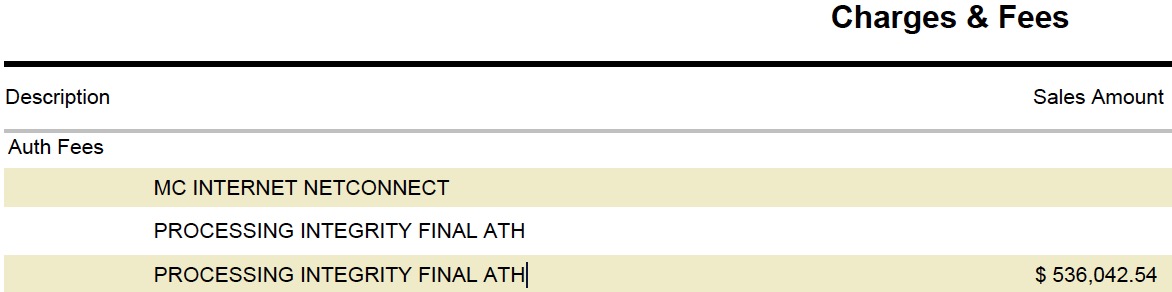
Look at this MasterCard PROCESSING INTEGRITY FINAL ATH Fee on a recent Chase Paymentech merchant statement.

mastercard PROCESSING INTEGRITY FINAL ATHOver $536,000 multiplied by .25% penalty fee for a total of $1,340.10 in avoidable costs. This is due to not properly authorizing and settling transactions, including reversals for unused authorizations. It’s too complicated to get into why this happens, but I’ve written multiple articles related to authorization validity, including one about the Visa Stored Credential Mandate.

The new fee of 0.25%, minimum $0.04 is assessed for each approved final authorization when*:

  • Authorization expired. The Final Authorization transaction is not cleared within 7 calendar days of authorization date, nor has it been fully reversed.
  • Authorization mismatch. The Final Authorization amount does not equal the clearing amount.
  • Unused Authorization. The Final Authorization transaction did not clear and full authorization reversal was not submitted. What’s really painful about this one, is if an order is cancelled, you can lose .25% of the transaction amount so you lost money not making a sale!
  • Final authorization currency code does not match the clearing currency code.

How can merchants avoid the MasterCard Processing Integrity fee?

Technology to manage the authorization and settlement process is the only way. Leaving it up to employees to figure out when an authorization is expiring and when a reversal is needed is a recipe for compliance fees like the above. Plus, chances are whatever system they’re using doesn’t even support the required data messages that need to go with the transaction.

The payment gateway plays a crucial role in authorization validity. A common misconception is that using a popular gateway, or even one owned by a card brand, or acquirer, will automatically get your transactions compliant. That is not the case.

I have extensive knowledge of many payment gateways. In my opinion, the CenPOS cloud commerce platform with suite of business solutions, including payment gateway, offers the best tools to automate authorization validity so you can avoid the MasterCard processing integrity final authorization fee as well as other penalty fees and assessments by multiple card brands.

Source: MasterCard Transaction Processing Rules 28 June 2018 TPR, Wells Fargo Payment Network Pass-Through Fee Schedule April 2016.

Christine Speedy, CenPOS Global Sales, 954-942-0483 is based out of South Florida, near Fort Lauderdale, and Rochester, NY. CenPOS is an integrated commerce technology platform driving innovative, omnichannel solutions tailored to meet a merchant’s market needs. Providing a single point of integration, the CenPOS platform combines payment, commerce and value-added functionality enabling merchants to transform their commerce experience, eliminate the need to manage complex integrations, reduce the burden of accepting payments and create deeper customer relationships.

FRAUDSTERS TARGETING CALL CENTER CHAT AND NON-VOICE CHANNELS

Visa Security Alert to the risk of online chat solutions and non-voice channel services within call centers and merchant online environments, which are expected to increase along with artificial intelligence. There are known instances where threat actors compromised online chat service providers and were able to distribute malware to merchant clients designed to intercept payment card data during checkout.

Read the story here in the Visa library for merchants. https://usa.visa.com/support/merchant/library.html

The Visa alert also points out the importance of verifying your technology partners are secure and compliant. This is especially interesting in the context of this article.

The Visa Global Registry of Service Providers is Visa’s designated source for information on registered and PCI DSS-validated agents that provide payment-related services to Visa clients and merchants. Service providers that store, process or transmit Visa payment data must be registered with Visa and demonstrate PCI DSS compliance. All of the links in this article can be found on the merchant rules and  PCI compliance links

Christine Speedy, CenPOS Global Sales, 954-942-0483 is a PCI Council QIR certified professional based out of South Florida, near Fort Lauderdale, and Rochester, NY.

Federal Reserve e-Commerce Fraud Study

Fraud Threats in the e-Commerce Channel Vex Merchants

Minneapolis, June 18, 2018 According to a new survey of 166 U.S. merchants with an e-commerce presence, card-not-present (CNP) fraud is the top payment threat to retailers. The survey also found that retailers worry about their ability to handle increased e-commerce fraud, which many merchants expect to increase over the next six to 12 months, largely as a result of data breaches. The survey, released by the Federal Reserve Bank of Minneapolis, aimed to uncover approaches retailers are using to effectively reduce payments fraud in the e-commerce space. It complements the financial institution fraud mitigation tool effectiveness study published by the Bank in the first quarter of 2018.

The report provides information about the use of payments fraud detection and prevention methods used in the e-commerce channel and how merchant respondents rated the methods. When asked where merchants devoted the most resources toward fraud mitigation, they indicated CNP in the online channel. Merchants largely rely on older mitigation tools such as security code and address verification, but some new tools are emerging. The emerging CNP fraud tools that merchants find most promising include artificial intelligence, facial and voice recognition, and multi-merchant purchase velocity checks.

“This study provides great insights into what merchants find effective for mitigating card-not-present fraud today and which emerging mitigation technologies they are beginning to use.  Retailers could use the information from the report to assess and enhance their current fraud mitigation strategies,” said Guy Berg, vice president of the Payments, Standards, and Outreach Group at the Minneapolis Fed.

The report also analyzes usage and effectiveness ratings of information-sharing partnerships that help merchants identify fraud attacks and exchange threat information.

Access the full 2018 Fighting Fraud in the e-Commerce Channel: A Merchant Study.


The Federal Reserve Bank of Minneapolis is one of 12 regional Reserve Banks that, with the Board of Governors in Washington, D.C., make up the Federal Reserve System, the nation’s central bank. The Federal Reserve Bank of Minneapolis is responsible for the Ninth Federal Reserve District, which includes Montana, North and South Dakota, Minnesota, northwestern Wisconsin and the Upper Peninsula of Michigan. The Federal Reserve Bank of Minneapolis participates in setting national monetary policy, supervises numerous banking organizations, and provides a variety of payments services to financial institutions and the U.S. government.


###

Blog author note: CenPOS cloud commerce solutions are part of a layered security approach that help reduce manual order reviews and mitigate risk of bot automated orders which can rack up authorization fees. Tools include 3-D Secure, including Verified by Visa and other card brand solutions, among others. Headquartered in Miami, Florida, CenPOS is reshaping the future of commerce through technology innovation and the secure, flexible and simple solutions this enables. Christine Speedy, CenPOS Global Sales, 954-942-0483 has extensive ecommerce experience to help businesses mitigate fraud risk while maximizing profits.

IBM Study: Hidden Costs of Data Breaches Increase Expenses for Businesses

Study for First Time Calculates the Full Cost of “Mega Breaches,” as High as $350 Million

CAMBRIDGE, Mass., July 11, 2018 /PRNewswire/ — IBM (NYSE: IBM) Security today announced the results of a global study examining the full financial impact of a data breach on a company’s bottom line. Overall, the study found that hidden costs in data breaches – such as lost business, negative impact on reputation and employee time spent on recovery – are difficult and expensive to manage. For example, the study found that one-third of the cost of “mega breaches” (over 1 million lost records) were derived from lost business.

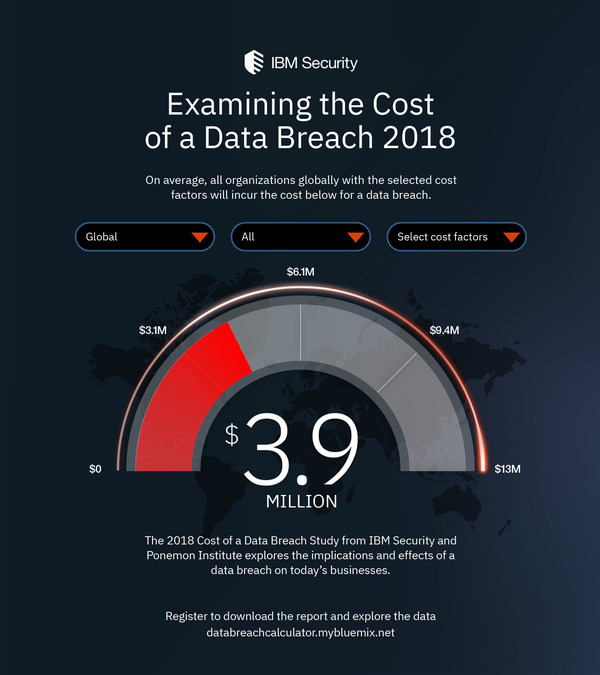
Sponsored by IBM Security and conducted by Ponemon Institute, the 2018 Cost of a Data Breach Study1 found that the average cost of a data breach globally is $3.86 million,2 a 6.4 percent increase from the 2017 report. Based on in-depth interviews with nearly 500 companies that experienced a data breach, the study analyzes hundreds of cost factors surrounding a breach, from technical investigations and recovery, to notifications, legal and regulatory activities, and cost of lost business and reputation.

This year for the first time, the study also calculated the costs associated with “mega breaches” ranging from 1 million to 50 million records lost, projecting that these breaches cost companies between $40 million and $350 million respectively.

“While highly publicized data breaches often report losses in the millions, these numbers are highly variable and often focused on a few specific costs which are easily quantified,” said Wendi Whitmore, Global Lead for IBM X-Force Incident Response and Intelligence Services (IRIS). “The truth is there are many hidden expenses which must be taken into account, such as reputational damage, customer turnover, and operational costs. Knowing where the costs lie, and how to reduce them, can help companies invest their resources more strategically and lower the huge financial risks at stake.”

Hidden Figures – Calculating the Cost of a Mega Breach
In the past five years, the amount of mega breaches (breaches of more than 1 million records) has nearly doubled – from just nine mega breaches in 2013, to 16 mega breaches in 2017.3 Due to the small amount of mega breaches in the past, the Cost of a Data Breach study historically analyzed data breaches of around 2,500 to 100,000 lost records.

Based on analysis of 11 companies experiencing a mega breach over the past two years, this year’s report uses statistical modelling to project the cost of breaches ranging from 1 million to 50 million compromised records.  Key findings include:

  • Average cost of a data breach of 1 million compromised records is nearly $40 million dollars
  • At 50 million records, estimated total cost of a breach is $350 million dollars
  • The vast majority of these breaches (10 out of 11) stemmed from malicious and criminal attacks (as opposed to system glitches or human error)
  • The average time to detect and contain a mega breach was 365 days – almost 100 days longer than a smaller scale breach (266 days)

For mega breaches, the biggest expense category was costs associated with lost business, which was estimated at nearly $118 million for breaches of 50 million records – almost a third of the total cost of a breach this size. IBM analyzed the publicly reported costs of several high profile mega breaches, and found the reported numbers are often less than the average cost found in the study.4 This is likely due to publicly reported cost often being limited to direct costs, such as technology and services to recover from the breach, legal and regulatory fees, and reparations to customers.

What Impacts the Average Cost of a Data Breach?
For the past 13 years, the Ponemon Institute has examined the cost associated with data breaches of less than 100,000 records, finding that the costs have steadily risen over the course of the study.  The average cost of a data breach was $3.86 million in the 2018 study, compared to $3.50 million in 2014 – representing nearly 10 percent net increase over the past 5 years of the study.

The study also examines factors which increase or decrease the cost of the breach, finding that costs are heavily impacted by the amount of time spent containing a data breach, as well as investments in technologies that speed response time.

  • The average time to identify a data breach in the study was 197 days, and the average time to contain a data breach once identified was 69 days.
  • Companies who contained a breach in less than 30 days saved over $1 million compared to those that took more than 30 days ($3.09 million vs. $4.25 million average total)

The amount of lost or stolen records also impacts the cost of a breach, costing $148 per lost or stolen record on average. The study examined several factors which increase or decrease this cost:

  • Having an incident response team was the top cost saving factor, reducing the cost by $14 per compromised record
  • The use of an AI platform for cybersecurity reduced the cost by $8 per lost or stolen record
  • Companies that indicated a “rush to notify” had a higher cost by $5 per lost or stolen record

This year for the first time, the report examined the effect of security automation tools which use artificial intelligence, machine learning, analytics and orchestration to augment or replace human intervention in the identification and containment of a breach. The analysis found that organizations that had extensively deployed automated security technologies saved over $1.5 million on the total cost of a breach ($2.88 million, compared to $4.43 million for those who had not deployed security automation.)

Regional and Industry Differences
The study also compared the cost of data breaches in different industries and regions, finding that data breaches are the costliest in the U.S. and the Middle East, and least costly in Brazil and India.

  • U.S. companies experienced the highest average cost of a breach at $7.91 million, followed by the Middle East at $5.31 million.
  • Lowest total cost of a breach was $1.24 million in Brazil, followed by $1.77 million in India.

One major factor impacting the cost of a data breach in the U.S. was the reported cost of lost business, which was $4.2 million – more than the total average cost of a breach globally, and more than double the amount of “lost business costs” compared to any other region surveyed. One major factor impacting lost business costs is customer turnover in the aftermath of a breach; in fact a recent IBM / Harris poll report found that 75 percent of consumers in the U.S. say that they will not do business with companies that they do not trust to protect their data.

For the 8th year in a row, Healthcare organizations had the highest costs associated with data breaches – costing them $408 per lost or stolen record – nearly three times higher than the cross-industry average ($148).

“The goal of our research is to demonstrate the value of good data protection practices, and the factors that make a tangible difference in what a company pays to resolve a data breach,” said Dr. Larry Ponemon, chairman and founder of Ponemon Institute. “While data breach costs have been rising steadily over the history of the study, we see positive signs of cost savings through the use of newer technologies as well as proper planning for incident response, which can significantly reduce these costs.”

Download Full Reports & Register for the Webinar
To download the 2018 Cost of a Data Breach Study: Global Overview, visit https://www.ibm.com/security/data-breach/

To view the digital infographic with study highlights, visit: https://costofadatabreach.mybluemix.net

To register to attend the IBM Security and Ponemon Institute webinar on July 26th at 11 a.m. ET, visit: https://ibm.biz/BdYDvf

About IBM Security
IBM Security offers one of the most advanced and integrated portfolios of enterprise security products and services. The portfolio, supported by world-renowned IBM X-Force® research, enables organizations to effectively manage risk and defend against emerging threats. IBM operates one of the world’s broadest security research, development and delivery organizations, monitors 35 billion security events per day in more than 130 countries, and has been granted more than 8,000 security patents worldwide. For more information, please check www.ibm.com/security, follow IBMSecurity on Twitter or visit the IBM Security Intelligence blog.

Media Contact:
Cassy Lalan
IBM Security Communications
319-230-2232
cllalan@us.ibm.com

1 Data collection began February 2017 and interviews were completed in April 2018
2 Average cost for data breaches of 2,500-100,000 lost or stolen records
3 Source: IBM analysis of Privacy Rights Clearinghouse’s Chronology of Data Breaches
4 Equifax data breach reported to cost company $275 million; Target 2016 financial report estimated $292 million loss as a result of 2013 data breach; Ruby Corp (the parent company of Ashley Madison) reportedly paid $11.2 million for the settlement of its 2015 breach.


SOURCE IBM